Maori Religion
\\\
Origins of the universe
There are many different versions of the creation story as the stories vary from tribe to tribe in the Maori religion, but each story that emulates the creation of the universe have common major themes such as, the movement from nothingness and darkness to light, the separation of the earth and sky (Papatuanuku and Ranginui) and the work of the gods (their children) in creating the natural world.
Te kore (nothingness, the void)
Te Po (darkness, the night)
Te Ao (light, the world)
Rangi (Sky Father)
Papa (Earth Mother)
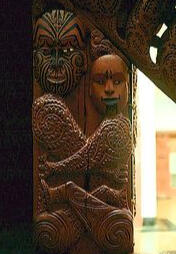
The Maori creation story begins with the separation of the earth (Papatuanuku) and the sky (Ranginui), as they emerge together as one out of darkness and nothingness. their children are born between them as both Rangi and Papa are merged as one, joined together.
The children born between Rangi and Papa conspire together to separate the earth and sky; thus successfully creating the natural world, to complete the creation, each child becomes a key deity (further discussed and elaborated on in supernatural powers and deities.)
The motives as to why the children of Rangi and Papa separated them varies from tribe to tribe as there are many different versions of the Maori creation story, for example in some versions it is the moon that persuades the children to separate their parents, in others, the sun or their yearning for freedom and see light.
Principal beliefs
The Maori indigenous religion’s principal beliefs centre around respect, honour and belief in a pantheon of Gods of the natural world. The sacredness and importance of growing hair, as it represents high status, health and wellbeing, as hair is believed to be a direct part of yourself, an extension of yourself and it holds power and connection to the human body spiritually.
The belief in mana, the supernatural spiritual power obtained from ancestors and atua (gods).
Belief in the spirit realm and that spirits exist on after death, and the underworld. The travelling of a spirit according to northern tribal beliefs, spirits travel to a place called Te Rerenga Wairua (“the leaping place of spirits”) then descending into Rarohenga, other tribes believe in the mythical place of Hawaiki the homeland of spirits.
supernatural powers and deities
The Maori religion has a pantheon of Gods and deities, as it is a polytheistic religion.
As these Gods are believed to be the children of Ranginui and Papatuanuku, they each govern different aspects of the natural world created by their separated parents. Deities in the indigenous Maori religion are called atua. The Maori believe that the grandchildren of Papatuanuku (earth mother) and Ranginui (sky father) are the first Maori peoples, the mortal race of today.
Main Atua that govern different aspects of the natural world include:
Tangaroa is the God of the ocean, the sea and sea creatures. Born as a huge fish in the seas created by Papa, Tangaroa created all sea creatures. Some tribes believe that the existence of humans sprung from the fish created by Tangaroa.
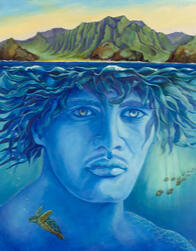
Tane Mahuta, the God of forests. Tane is initially responsible for the separation of Rangi and Papa, as it is said in some tribal stories that he pushed them apart with his legs with great might causing his parents to separate.
Hinenuitepo, the goddess of death and night and the child of Tane Mahuta and a mortal woman hi made from mud. Hinenuitepo unknowingly marries her father Tane without knowledge that she was her daughter, later finding out; disgusted, Hinenuitepo ran to the spirit world, becoming the goddess of the underworld.
Rona is the mortal daughter of Tangaroa, becoming the goddess of the tides. According to Maori beliefs Rona once swore at the moon, angered; she was kidnapped by the moon into the sky, it is said that she is seen up there today doing her work and controlling the tides from the moon.
Tawhirimatea, the God of weather. Tawhirimatea opposed the separation of Rangi and Papa, sending violent natural disasters upon the natural world in spite of Tane Mahuta. The God of war and people, Tumatauenga, gathered an army of his children to challenge Tawhirimatea. Neither God ever won, so they still battle to this day. As this is the indigenous Maori explanation for natural disasters destroying human resources and people till this day.
Mana
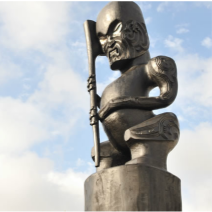
In the Maori religion, there is belief in the spiritual power called Mana. Mana can be either inherited from ancestors as it is a legacy or earned through social recognition and skill (haka). As spiritual power is derived from mana, to have mana is to have great prestige, honour, authority and respect. To have more mana is to be more spiritually powerful and influential.
Rituals
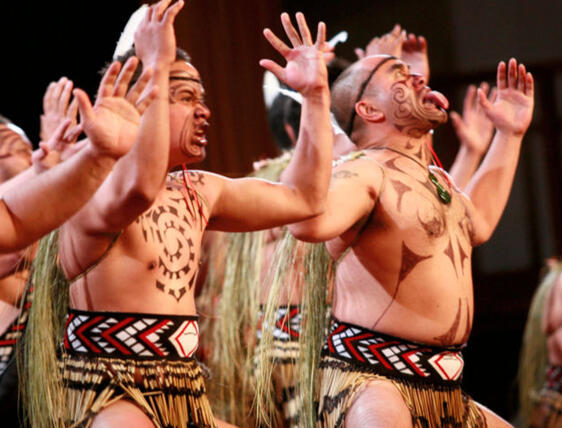
Haka is a sacred ceremonial dance used in many different contexts in most, to honour at funerals, gatherings, weddings, birthdays, to welcome someone or to intimidate a challenger. Haka is predominantly performed by men with aggressive, rapid movement, fierce foot stamping, and a protruding tongue, as facial expressions are important to the performance, facial expressions during Haka and other Maori performances are called Pukuna, to express the intense emotions. Haka is commonly seen performed by maori sporting teams (most famously rugby) to intimidate the opposing team. Haka is also performed by women as well, sometimes even alongside the men. There are many different types of Haka, ones only men can perform, ones all can perform and ones only women can perform, as each Haka has different lyrics sung and chanted with different meanings.
As well as fierce rapid movements Haka is performed with “quivering hands” the act of shaking hands is to honour the Maori sun God Tamanuitera, as he and his wife Hineraumati embody the sun and the essence of summer, the quivering hands symbolise the waves of heat in summer, honouring the sun God to gain Mana (spiritual power) whilst performing the Haka.
Powhiri
The Powhiri ritual is a welcome ceremony. The Powhiri happens at the entrance of a marae (marae is the sacred communal meeting place of the Maori people) Powhiri is to welcome the visitors of the marae, or to any building, it is equivalent to a blessing.
Hongi
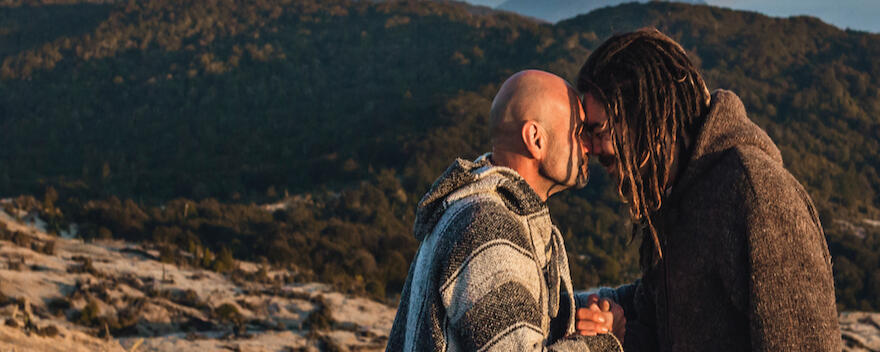
Hongi is a traditional Maori greeting, to press your forehead and nose with the person you are greeting, as equivalent to shaking hands. In the Maori religion, Hongi originated from the belief of the first woman, Hineahuone (“earth formed woman”) that was created by the Gods, Hongi is to symbolise when Tane Mahuta embraced her and breathed life into her nostrils.
influence in society In societyand human search for meaning
the Maori religion provides a plethora of explanations in terms of the creation of the universe and the natural world. With the polytheistic belief in the pantheon of Gods called Atua, the Maori indigenous culture and religion allows them to have a deep connection with the land and nature. As honour plays a big role in importance this influences the society and population of New Zealand to have a deep integrated connection with the Maori religion and culture despite not being of maori descent or having belief in the religion. It is the concept of respect and honour that is so deeply integrated throughout the religion that translates into society today. With rituals such as the haka being performed to a large scale in the 21st century in New Zealand through sporting teams such as rugby, the haka is also taught in schools as well as other maori kapa haka songs and dance to people and children from other backgrounds and walks of life. The respect and honour that translates through the teachings of the Maori religion and culture allows society to integrate themselves into the beliefs and customs in terms of respect into their everyday lives, whether they are Maori or not. This concept is also seen through the Hongi greeting, as at important events and gatherings this greeting is still used today by people who are not of the maori descent or faith, as Hongi has transcended time it contributes to the consensus of respect that has been so well integrated into the culture of the people of New Zealand.
The Maori indigenous people’ faith also provides connection between society and people with a strong sense of community, with descendants from the multiple tribes still thriving today; this religion may not be well known but it is important and vital with its importance to the society of New Zealand, as the language, the art, the mythology and history of this culture and faith is so important to the country as a whole, still being taught in schools and celebrated today.

Bibliography
100% Pure New Zealand - KAPA HAKA 2021
Accessed 18th of March 2021
https://www.newzealand.com/au/feature/kapa-haka-maori-performance/
100% Pure New Zealand - THE HAKA 2021
Accessed 18th of March 2021
https://www.newzealand.com/int/feature/haka/
Britannica, inc - Haka 2021
Accessed 19th of March 2021
https://www.britannica.com/art/haka
Hair in Maori culture PDF. 2006
Accessed 19th of March 2021
https://onlinelibrary.wiley.com/doi/pdf/10.1111/j.1467-842X.2006.tb00472.x
Culture Trip - Maori culture : What is A Marae? 2021
Accessed 20th of March 2021
https://theculturetrip.com/pacific/new-zealand/articles/maori-culture-what-is-a-marae/
MANA Shuzou - The meaning of mana 2021
Accessed March 20th 2021
http://www.manashuzou.co.nz/about-mana-shochu/the-meaning-of-mana.aspx
New Zealand Manuka Group - The Hongi - A Maori greeting date N/A
Accessed 20th of March 2021
https://www.nzmanukagroup.com/find-out-more/news/archive/hongi-maori-greeting#
Rawinia Higgins, 'Tangihanga – death customs', Te Ara - the Encyclopedia of New Zealand 2011
Accessed 19th of March 2021
https://teara.govt.nz/en/tangihanga-death-customs/print
Te Ahukaramū Charles Royal, 'Māori creation traditions', Te Ara - the Encyclopedia of New Zealand
Accessed 20th of March 2021
https://teara.govt.nz/en/maori-creation-traditions/print
The Big Myth - Maori Pantheon 2011
Accessed 19th of March 2021
http://www.bigmyth.com/download/MAORI_PANTHEON.pdf
Tota World ‘maori beliefs’ of New Zealand 2019
Accessed 19th of March 2021
https://www.tota.world/article/572
Weebly - Maori Mythology date N/A
Accessed 20th of March 2021
https://maori-myths.weebly.com/deities.html
YouTube - “Haka - History” uploaded by AIG 2014
Accessed 19th of March 2021
https://www.youtube.com/watch?v=AnlFocaA64M